Convert between the units (t → g) or see the conversion table. Then you will multiply the number of moles.
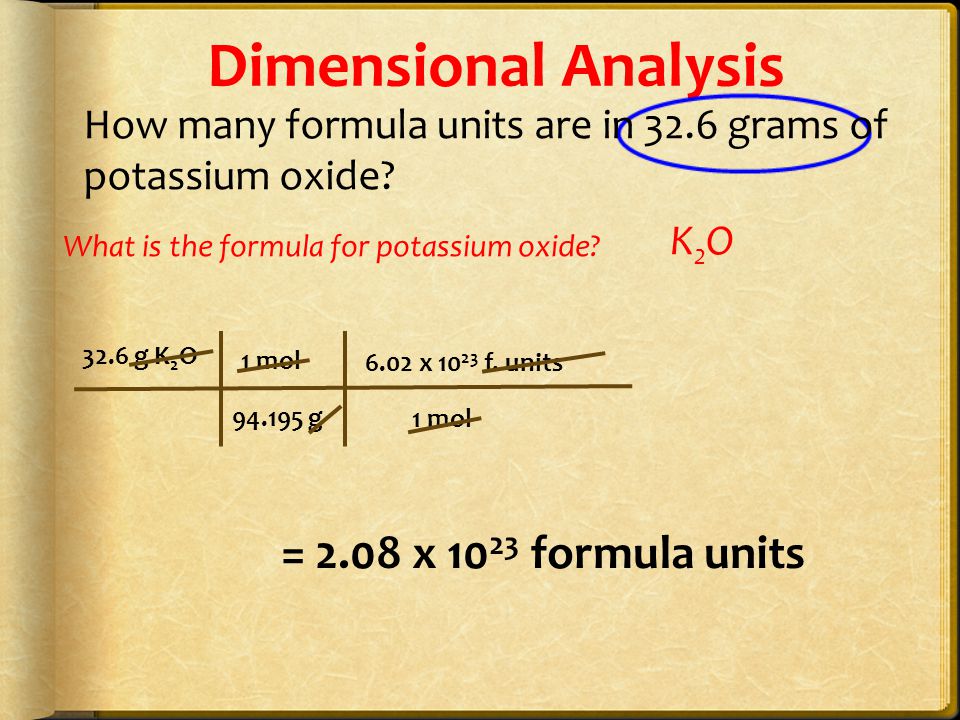
Mole Gangnam Style - Ppt Download
Convert 15 u to g:
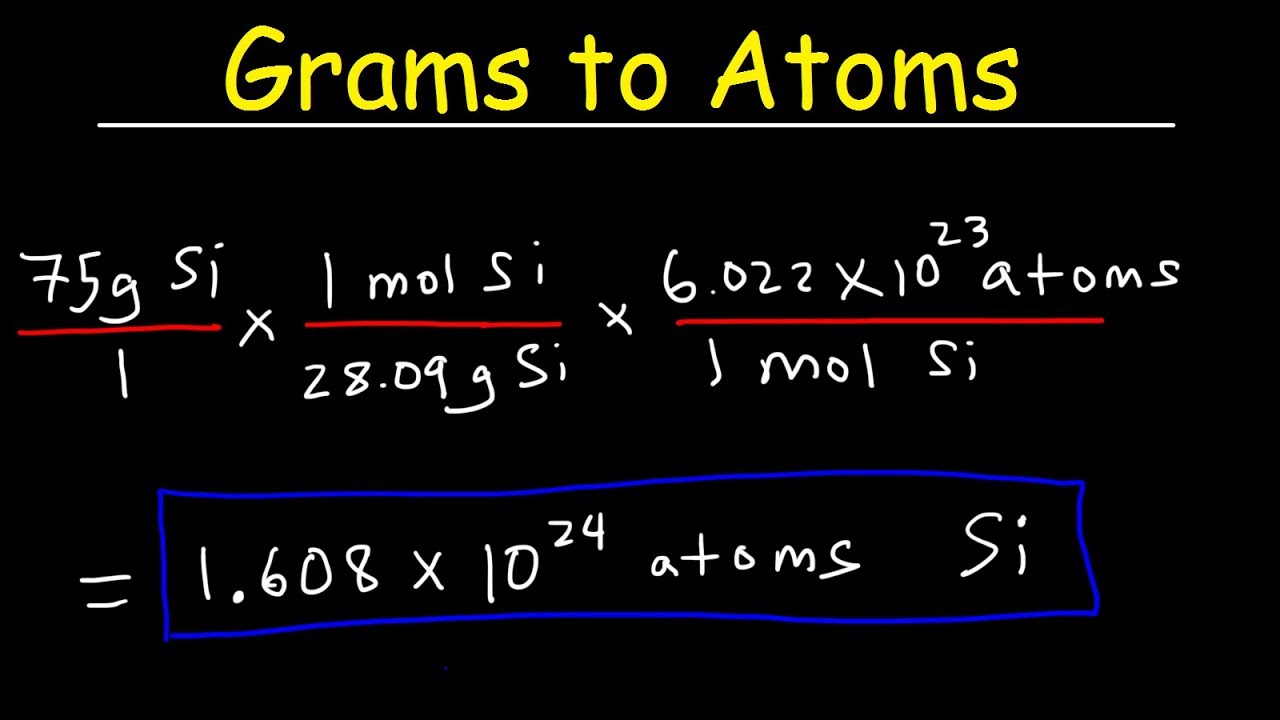
Formula units to grams. By staff writer last updated april 02, 2020. First you need to determine the number of moles in 0.67 g cao. Decimal digits convert from micrograms to grams.
Get more information and details on the 'grams' measurement unit, including its symbol, category, and common conversions from grams to other force units. Gram formula mass = mass of the solute/formula mass of the solute. About press copyright contact us creators advertise developers terms privacy policy & safety how youtube works test new features press copyright contact us creators.
Solution look for the atomic masses of hydrogen, sulfur and oxygen. The number of grams of kclo3 will be 306.37 and here is how you should enter this. 0.67 grams of cao contain 7.2 ×10²² formula units.
Type in unit symbols, abbreviations, or full names for units of length, area, mass, pressure, and other types. Grams conversion calculators, tables and formulas to automatically convert from other weight units. H = 1.008 s =.
Units cacl2 ⋅ 1 mole cacl2 6.022 ⋅ 1023 f. Grams is a measure of force. Multiply the given number of moles (2.50 mol) by the molar mass (122.548 g/mol) to get the grams.
A unit of weight equal to one sixteenth of a pound or 16 drams or 28.349 grams ounces to grams formula g = oz 0.035274 grams a metric unit of weight equal to one thousandth of a kilogram. Type in the amount you want to convert and press the convert. Units cacl2 = 0.4998 moles cacl2 now, calcium chloride has a molar mass of approximately 111 g mol−1, which means.
Examples include mm, inch, 100 kg, us fluid ounce, 6'3, 10 stone 4, cubic cm,. To convert from molecules to grams, it is necessary to first convert the number of molecules of a substance by dividing by avogadro’s. Thus, the moles to gram conversion formula or gram to moles conversion formula is given below:
Weight in grams = number of moles ∗ molar mass of the substance normally the. 5 kg * 1000 [ (g) / (kg) ] = 5000 g to. It is always expressed in the unit.
To simply convert from any unit into grams, for example, from 5 kilograms, just multiply by the conversion value in the right column in the table below. Electronvolt is a unit of energy and can be described by the formula e=mc², where e represents energy, m stands for mass, and c is the speed of light. How to convert ounces to grams.
A metric unit of weight equal to one thousandth of a kilogram. 1 ounce (oz) is equal to 28.34952 grams (g). Convert between units using our free converter.
Convert micrograms to grams (μg → g) micrograms to grams precision: The actual formula for calculating the gram molecular mass of a substance is : How to convert atomic mass unit to gram.
Three people who have scores of 52, 43, and 34 want to know how well they did on the measure. This is saying that 97.5 % of scores are outside of the shaded area on the right.
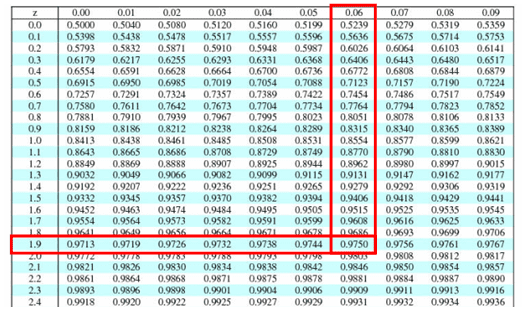
Z Scores (Z Value) & Z Table - Six Sigma Study Guide
To explain what this means in simple terms, let's use an example (if needed, see our statistical guide, normal distribution calculations , for background information on normal distribution calculations).

Units for z score. It does not use an interval scale e. As a result, you will get the final value which is 0.99266. Which of the following is unique to z scores (when compared to percentiles) a.
Whole number and the first digit after the decimal point). Z score and process capability are used together to get a view of your process. Then, we look up a remaining number across the table (on the top) which is 0.09 in our example.
The z score or value in process capability calculation is the mean distance from specification limits (usl and lsl) measured in standard deviation units. Zetta (unit symbol prefix z) is a decimal unit prefix in the metric system denoting a factor of 1021 or 1000000000000000000000. It is used to compare an individual data point with respect to the group c.
Remember, these percentages remain true only if our sample or population is normally distributed! In another example, a raw score of 1600 from a distribution with mean 1000 and variance 90,000 is given. For example, z = ± 2 represents the region under the probability curve that is within two standard deviations of the mean.
Here's the same formula written with symbols: It does not limit to any specific distribution. Z score tells the defects within the system.
Z = x − μ σ z = standard score x = raw observed data point μ = population mean σ = population standard deviation. It can compare scores with different units d. How do we find the z score?
What does the unit z mean? Hope that helped answer link It uses standard deviations as a metric f.
In this case it is 1.0. For z = 1.96, p =.97500 if we multiply that by 100, that means that 97.50% of the scores in this distribution will be below this score. Additionally, the area for all scores less than zero is half (50%) of the distribution.
In other words, z score tells the number of standard deviation existed between the mean and. Z = 52 − 40 7 = 1.71 z = 43 − 40 7 = 0.43 z = 34 − 40 7 = − 0.80 a problem is that these new z. Because of the symmetry, the interval from 0 to +0.65 must be half of that:
It transforms a raw score to another scale b. This tells us that an exam score of 80 is. It represents the number of standard deviations from the mean.
Standard normal distribution table) comes handy.
This question is solved by dividing 5.15 g by the molar mass of the compound. G for gram, one symbol only is just the unit, so that is grams;

Formula Unit Mass - Youtube
Hence, it is not a unit vector.

How to find formula units. Formula units = (5.15g/ (246.48 g/mol)) (6.022x10^23) Aluminium and oxygen } $$. Formula for magnitude of a vector is:
K for kilo, m for meter becomes kilometer (a thousand meters); Mass = 5.71 × 10⁻²⁹ m³ × (7.00 g/1 cm³) × (100 cm/1 m)³ = 3.99 × 10⁻²² guse the molar mass to convert grams to moles. Meter = l × b × h = cubic meters centimetre = l × b × h ÷ 10,00,000 = cubic meters millimetre = l × b × h ÷ 1,00,00,00,000 = cubic meters inches = l × b × h ÷ 61,023.8 = cubic meters feet = l × b × h ÷ 35.315 = cubic meters properties of cubic meters
The same procedure works for many other ionic compounds, and for. For example, e.9 (b) asks for the number of formula units of magnesium sulfate heptahydrate in a 5.15 g sample of the compound. The cost per unit means more than how much it costs to produce a single unit of your product.
It can be done in two ways: (23 x 2) + 16 = 62 one mole of sodium oxide has a relative formula mass of 62 grams. Variable cost per unit definition.
Modulus of the vector, = = √3. 1.67 × 10 ⁻²⁴ mol × (6.022 × 10²³ formula units/1 mol) = 1.00 formula units Usually, xyz coordinates are used to write any vector.
Use avogadro’s number to calculate the number of formula units. The formula for measuring different units in the meter are listed below: About press copyright contact us creators advertise developers terms privacy policy & safety how youtube works test new features press copyright contact us creators.
Unit vector, = = problem 4: Μ for micro, s for second becomes microsecond (a millionth of a second); The molecular formula is a multiple of the empirical formula.
To find the formula unit for aluminum oxide, these numbers are simply swapped round to give a compound with three atoms of oxygen for every two of aluminum: The above is a unit vector formula. 3.99 × 10⁻²² g × (1 mol/239.8 g) = 1.67 × 10 ⁻²⁴ moluse avogadro’s number to calculate the number of formula units.
Therefore, 1 unit cell of tlcl contains 1. Cost per unit = (total fixed costs + total variable costs) / total units produced. Variable cost per unit refers to the cost of production of each unit produced in the company, which changes when the volume of the output or the level of the activity changes in the organization, and these are not the committed costs committed costs committed costs are fixed, budgeted, or confirmed payments to be made in the future to.
B) to find the formula units of the compound we just need to take the amount of sample and divide it by the molar mass to find out how many moles of the sample we have. Using the mole (really just a fancy dozen) to talk about how many atoms or molecules we have. Magnitude of a unit vector is 1, which means:
M for mega, n for newton becomes meganewton (a million newtons); Then we use avogadro's constant to find out how many formula units we have of the compound. Which means, squaring both sides, question 5:
| a → | = x 2 + y 2 + z 2. 12 + 16 = 28 to find the relative formula mass of sodium oxide, na 2 o, you multiply the relative atomic mass of sodium times its subscript and add the value to the relative atomic mass of oxygen: Divide this number by the molecular weight of the empirical formula to find the number of empirical formula units that make up the compound.
Divide the mass (g) of the given. Your answer will then be in moles. A → = ( x, y, z) u s i n g t h e b r a c k e t s.
It also represents your breakeven point, or the minimum you must sell the item at before you can start making a profit. Magnitude of this vector is not 1. Find the unit vector in the direction of.
If is a unit vector then find the value of z. Formula unit in chemistry, a formula unit is the empirical formula of any ionic or covalent network solid compound used as an independent entity for stoichiometric calculations. Unit vector = vector / vector’s magnitude.
A → = x i ^ + y j ^ + z k ^. 1.67 × 10 ⁻²⁴ mol × (6.022 × 10²³ formula units/1 mol) = 1.00 formula units. $$\text {elements in the compound:
For example, if your product's cost per unit is. It is the lowest whole number ratio of ions represented in an ionic compound. We were given the molecular weight of the molecule, 180.18 g/mol.
Identify the given chemical formula and the constituting elements. M for milli, m for meter becomes millimeter (a thousandth of a meter);