Gain of electrons leaves an atom with a net negative charge, and the atom is called an anion. 1 is a graphical depiction of this process.

Why Do Atoms Gain Or Lose Valence Electrons?. To Become Stable Why Do Atoms Gain Or Lose Valence Electrons? - Ppt Download
Does an atom lose electrons?

Why do atoms gain or lose electrons. You mix an acid and water. It is called chemistry of acids. Why do you think atoms lose electrons?
Atoms that lose electrons acquire a positive charge as a result because they are left with fewer negatively charged electrons to balance the positive charges of the protons in the. Atoms share ,gain, or lose electrons when. An atom will lose or gain electrons to try and fill its outer shell.
When electrons absorb or release energy their electrons can move to higher or lower energy levels. Atoms and chemical species lose or gain electrons when they. On the left, a sodium atom has 11 electrons.
Ions = charged particles which are formed in ionic bonds. When accepting an electron stabilizes the atom, then the atom will reach a lower energy state by releasing the energy. Yes, atoms (and molecules) can gain or lose protons.
The ionization energy of metals is lower than the ionization energy necessary to take. So atoms or elements, when they exist as ions, they want to lose/gain or share electrons to attain a stable electronic. These ions are atoms that gain or lose electrons, giving them a net positive or negative charge.
Ionic compounds are compounds made up of ions. Why do atoms need to gain or lose electrons? The formation of a sodium ion.
Why do atoms gain or lose electrons when they are ions? This is because, higher the stability, lower is the energy content. Why do atoms gain or lose electrons to form ions?
Elements have to gain/lose electrons because they are automatically attracted to those whom when they connect, they will form a perfect pair of 8 valence electrons, the valence. Why do atoms lose electrons? If an atom has an equal number of protons and electrons its net charge is 0.
A proton is exchanged and you now have a negative ion. If the element is more electronegative, the tendency of it to keep the electrons in it is more. It is easier for iodine to gain an electron rather than to lose 7, so it will form an anion, or negatively charged ion, i−.
Atoms and chemical species lose or gain electrons when they react in order to gain stability. Thus, typically, metals (with nearly empty outer shells) lose. Atoms and chemical species lose or gain electrons when they react in order to gain stability.
Why do atoms gain or lose electrons quizlet? Atoms form ions by losing or gaining electrons because it makes them more stable and this state takes less energy to maintain. The octet rule has been satisfied.
If it loses an electron it. Thus, typically, metals (with nearly. These electrons lose energy by emitting light when they.
If it gains an extra electron it becomes negatively charged and is known as an anion.
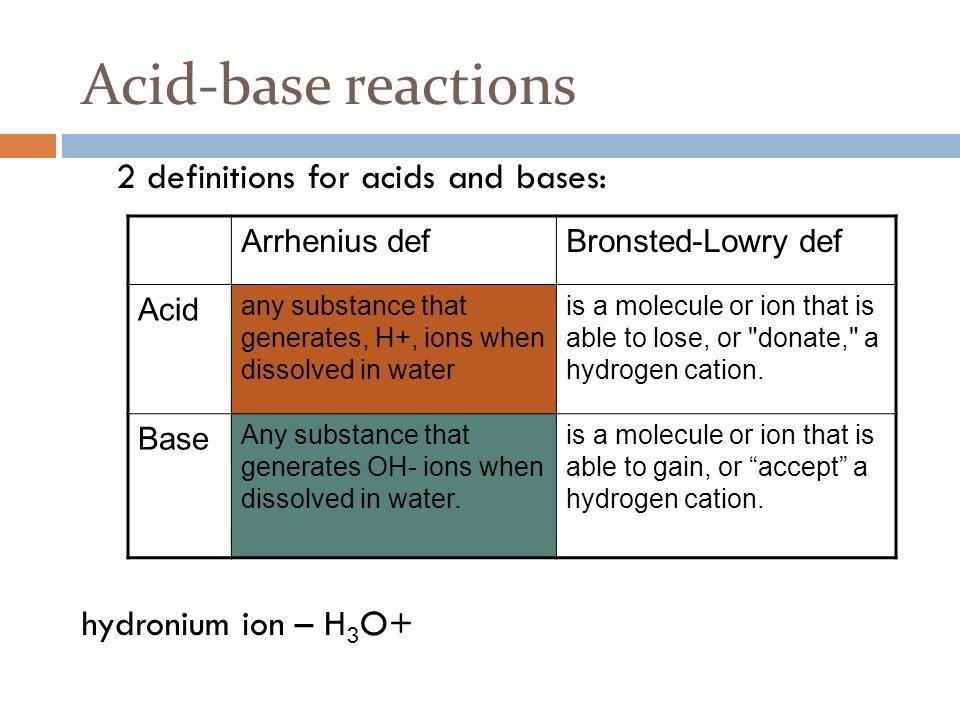
Acids increase the number of hydrogen ions (h+) in a solution (there are more hydrogen ions than hydroxide ions) and the resulting solution is said to be acidic. When an acid dissolves in water, hydrogen ions interact with water to form hydronium ions.
Human Impact On Air Quality September 24, Ph Scale Ph Scale – Measures How Acidic An Object Is. Ph Value Is Related To Its Hydronium Ion Concentration. - Ppt Download
When a chemical loses a hydrogen ion, is it behaving as an acid or a base?
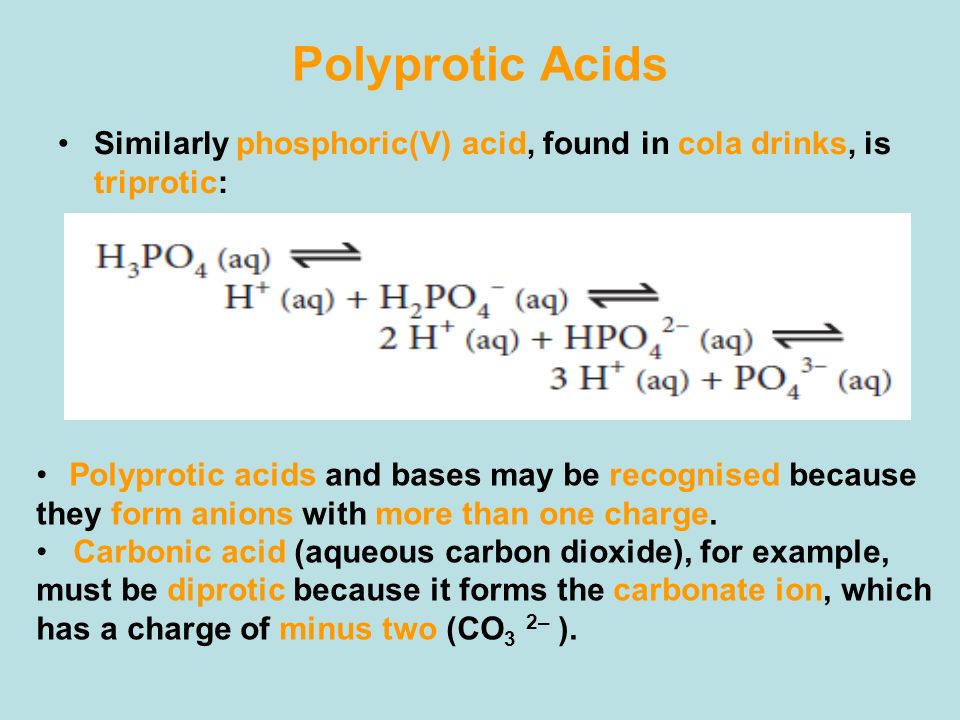
Do acids lose or gain hydrogen ions. The proton is considered to be donated rather than released; Need a bit more clarification? An acid is anything that loses a hydrogen ion (h+).
Acids contain at least one hydrogen atom that can be removed when the acid is dissolved in water. What ions do acids release in solutions? The strength of an acid or base depends on how many acid.
Ions are elements that lose or gain electrons. They can only lose them to other substances having strong negative regions that attract hydrogen ions. As the ph increases in acids, the acids lose their ability to ionise in water, so less hydrogen ions are produced.
Hydrogen ions are referred to as protons; Bases increase the number of hydroxide ions (there are more hydroxide ions than hydrogen ions) and the resulting solution is said to be basic or alkaline. Electrons how can ions be described?
What do ions gain or lose? Do hydrogen ions form when acids are dissolved in water? Bases increase the number of hydroxide ions (there are more hydroxide ions than hydrogen ions) and the resulting solution is said to be basic or alkaline.
Reactions between strong acids and strong bases decompose more completely into hydrogen ions (protons, positively charged ions) and anions (negatively charged ions) in water. An acid is a substance that produces hydrogen ions in a water solution. So stronger acids, like hydrochloric acid with a low ph, produce more hydrogen.
Acids, on the other hand, cannot lose hydrogen ions to empty space; Acids increase the number of hydrogen ions (h+) in a solution (there are more hydrogen ions than hydroxide ions) and the resulting solution is said to be acidic. For a weak acid and a weak base, neutralization is more appropriately considered to involve direct proton transfer from the acid to the base.
According to the arrhenius definition of acids and bases, acids dissociate and release hydrogen ions in solution (which, by the way is easily googleable), thus. When dissolved in water, acids donate hydrogen ions (h+). Do metals gain electrons from ions?
Hydrogen ions are hydrogen atoms that have lost an electron and now have just a proton, giving them a positive electrical charge.
ads
Pages
Search This Blog
Blog Archive
- January 2023 (76)
- December 2022 (227)
- November 2022 (197)
- October 2022 (24)
Labels
- 0001
- 0081
- 111009
- 2205
- 2sinx
- 2x2yz5
- about
- absolute
- acceleration
- acceptable
- acetate
- achiral
- acid
- acids
- active
- adaptation
- additional
- affect
- africa
- allowance
- alpha
- aluminum
- always
- amide
- ammonia
- ammonium
- amphibians
- amplitude
- amss
- anaphora
- angle
- animals
- answers
- anti
- antiderivative
- antiderivitive
- antigen
- antonym
- apostrophe
- arccos
- archaea
- arcsin
- arctan
- arctanx
- area
- areq
- aromatic
- arteries
- atom
- atomic
- atoms
- awhere
- axis
- ball
- barium
- base
- bases
- bear
- become
- benzene
- beryllium
- beta
- between
- bigger
- biomes
- biotic
- black
- block
- bohr
- boil
- bond
- bonding
- bonds
- bone
- bored
- boron
- bound
- brf4
- broken
- bromination
- bromine
- bromo
- bronsted
- buffer
- butylcyclohexane
- c6h8o6
- cacl
- calcium
- calclulate
- calculate
- calculating
- calculator
- called
- calories
- campgrounds
- capacity
- captain
- carbon
- causes
- cell
- cells
- cellular
- center
- cfrequency
- chair
- change
- channel
- characteristics
- charge
- charges
- chiral
- chlorine
- chlorite
- choice
- chordata
- cillia
- circle
- citric
- clients
- clo2
- colorado
- combined
- complete
- compound
- compounded
- condensed
- confidance
- configuration
- confuguration
- congfuration
- conjugate
- constant
- continuous
- conversion
- convert
- copper
- core
- cos2x
- cosecant
- cosh
- cosines
- cospi
- cosx
- cosxsinx
- cotanx
- cotxcosxsinx
- count
- covalent
- create
- creatures
- crystal
- crystals
- cu2o
- cubic
- curve
- cycle
- cyclic
- cyclohexane
- cyclohexene
- daily
- decays
- decoxide
- deep
- define
- definition
- degree
- degrees
- delta
- deltagdeltah
- denature
- dense
- density
- derivatibe
- derivative
- derive
- determine
- deviation
- diagram
- diagrm
- diameninesilver
- diatomic
- difference
- differentiate
- difluoride
- dioxide
- diphenyl
- displacement
- dissection
- divided
- divsor
- dmso
- does
- double
- down
- each
- eighteen
- elastic
- electrolyte
- electron
- electrons
- elements
- emission
- empirical
- endian
- energy
- entropy
- equilateral
- error
- ethanol
- eukarya
- everyday
- evolution
- example
- examples
- excel
- excited
- exocrine
- exponential
- express
- fibrin
- fibrinogen
- find
- finding
- first
- five
- fives
- flattened
- fluoride
- fluorine
- fluoromethane
- force
- forces
- form
- formal
- formation
- formula
- four
- fourier
- fourth
- fraction
- freezing
- from
- function
- functions
- fxgx
- gain
- gallium
- gases
- gene
- generator
- geometry
- giant
- given
- gold
- good
- gradient
- grams
- graph
- ground
- group
- growth
- h2so4
- half
- halogenated
- halogens
- happen
- have
- heat
- helium
- herbivores
- hexane
- hn02
- homo
- horizontal
- hpo4
- humans
- husband
- hyaline
- hybridization
- hybridized
- hydrogen
- hydroxide
- hyperbola
- ideal
- imani
- imine
- important
- increases
- indicative
- infinity
- infity
- inner
- inorganic
- integral
- integration
- intel
- intercept
- intermolecular
- interval
- into
- invereses
- inverse
- iodine
- ionic
- ions
- isotope
- leaving
- left
- level
- lewi
- lewis
- life
- limit
- line
- linear
- liquid
- liters
- lithium
- little
- live
- living
- ln6x
- lnxx
- log10
- lose
- lumo
- machines
- maclauren
- made
- magic
- magnesium
- magnesuim
- make
- makes
- mango
- many
- marilyn
- mean
- meaning
- means
- measure
- meiosis
- melting
- metal
- metalloids
- metals
- methane
- methyl
- mgfecl2
- milian
- milk
- millimeters
- model
- modern
- molar
- molarity
- mole
- molecular
- molecule
- molecules
- moles
- most
- much
- na2o2
- nacl
- name
- naoh
- natural
- need
- negaive
- negative
- neon
- neutralization
- neutrons
- newman
- next
- niche
- nitrate
- nitride
- nitrite
- nitrogen
- noble
- nominative
- nonmetals
- nonpolar
- notation
- nuclear
- nucleolus
- nucleophile
- nucleophioles
- nucleus
- null
- numbe
- number
- numbers
- ocean
- odor
- open
- orbital
- order
- organic
- organisms
- over
- oxalic
- oxidation
- oxygen
- pageant
- palladium
- parallelism
- parametrize
- pelectrons
- penny
- percent
- perform
- period
- periodic
- person
- personification
- phosphorous
- photon
- pick
- pink
- plants
- plural
- plus
- point
- polar
- polyatomics
- polynomial
- positive
- postive
- potential
- practice
- predicate
- predict
- present
- pressure
- prime
- problems
- product
- projection
- prokaryotic
- propene
- proper
- protein
- proteins
- protic
- protons
- punctuate
- quantum
- quarters
- questions
- radial
- radians
- radical
- rainfall
- range
- rate
- reaction
- reactivity
- reasons
- reciprocal
- recoil
- rectifier
- reflex
- region
- reonance
- replication
- resonace
- resonance
- respiration
- ribosomes
- rock
- root
- root6
- rose
- rotated
- rule
- same
- sank
- score
- sec2
- sec2x
- second
- section
- secx
- sedimentary
- seeds
- seesaw
- self
- series
- shape
- shaped
- shapes
- shift
- sigfigs
- simple
- simplify
- sin195
- single
- singular
- sink
- sinx
- sinx0
- sinxcosx
- slope
- smell
- sodium
- soluble
- solutions
- solve
- somethin
- source
- spread
- sqare
- square
- squared
- squares
- stair
- standard
- state
- statistic
- sticks
- straw
- strong
- strongest
- structural
- structure
- structures
- subduction
- sugar
- sulfate
- sulfer
- sulfide
- sulfur
- sunk
- superego
- supernova
- supplemetn
- synaptic
- table
- tangent
- tanx
- taylor
- tdeltas
- teen
- temp
- temperature
- tends
- test
- tetrads
- tetrahedral
- tetraphosphorus
- than
- that
- theta
- things
- third
- threshold
- ti84
- times
- tips
- torr
- trachea
- trait
- trans
- transmission
- trees
- trench
- trends
- trinomials
- twenty
- type
- unfactorable
- units
- unwound
- using
- valence
- value
- vanillin
- verb
- versus
- vertex
- vinegar
- violation
- volcanoes
- volume
- vsepr
- warped
- water
- wave
- wavelength
- weak
- weekly
- weigh
- weight
- what
- when
- where
- which
- will
- wirh
- with
- without
- wooden
- write
- xcscx
- xtan
- year
- your
- zero
- zinc
- zncl2