Sometimes develop your own equations in a step by step manner. Its layered structure resembles that of the brucite polymorph of nickel (ii) hydroxide, but with half as many hydrogens.

Hydroxide - Wikipedia
The results showed that, with increasing loading of naoh, the h2s breakthrough.

Oxidation number of hydrogen in hydroxide. How many hydroxide ions are needed to form water? The oxidation state defines the electropositive or electronegative nature of an element in a compound. And thus the oxidation numbers for hydrogen and oxygen in water are +i and −i i.
The ion has one oxygen atom and one hydrogen atom. Calculating the oxidation state of hydrogen in h 2 o (water) the oxidation state of oxygen(o. Four activated carbons of various origins were impregnated with different concentrations of sodium hydroxide and used as hydrogen sulfide adsorbents in an accelerated test.
Experimental and literature data on hydrated hydroxide melts are analyzed. The materials were characterized using nitrogen sorption, thermal analysis, and standard astm methods. Just follow the steps one by one.
The oxidation number of hydrogen is +1 except in q. Do this for water h −o −h, and we get h + +h o−; What is the oxidation number of lithium in lithium.
[i m directly doing above]. The oxidation number of hydrogen is + 1 except when it is bonded to metals in binary compounds (that is compounds containing two elements). The oxidation state or number is the charge on the individual ionic element.
The sum of the oxidation numbers of all the atoms in a neutral compound is 0. The oxidation number of h is +1 (rule 1). The hydrogen oxidation reaction (hor), which is a fast 1e− process, takes place at the anode, and the oxygen reduction reaction (orr), which is a slow 4e − process, takes place at the cathode.
Hydrogen is less electronegative than oxygen, and so will possess its usual +1state. Shreyash lavate studied computer science & chemistry at willingdon college, sangli 4 y related The oxidation number of hydrogen is +1 when it is combined with a nonmetal as in ch 4, nh 3, h 2 o, and hcl.
I reiterate that this is an entirely conceptual exercise. 2h + cuo → cu + h2o. The oxidation number of simple ions is equal to the charge on the ion.
The oxidation state of nickel is 3+. The rigmarole can sometimes help to balance redox equations. In a hydroxide (oh−)ion, we see that the total charge of the ion is −1.
[2] it can be prepared by the reaction of nickel (ii) hydroxide with aqueous potassium hydroxide and bromine as the oxidant: The charge on each of the elements defines how many electrons are lost or gained by the element by the ion. [3] 2 ni (oh) 2 + 2 koh + br 2 → 2 kbr + 2 h 2 o + 2 niooh
Oxidation number denotes the oxidation state of an element in a compound ascertained according to a set of rules formulated on the basis that electron pair in a covalent bond belongs entirely to a more electronegative element. That means, the total sum of the oxidation numbers of the elements present in the ion totals out to be −1. Do this again for hydroxide, we get h + +o2−.
[1] h 3 o + + oh − ⇌ 2h 2 o the equilibrium constant for this reaction, defined as kw = [h + ] [oh −] [note 1] The oxidation number of hydrogen. The oxidation number of hydrogen is + 1 except in binary compounds.
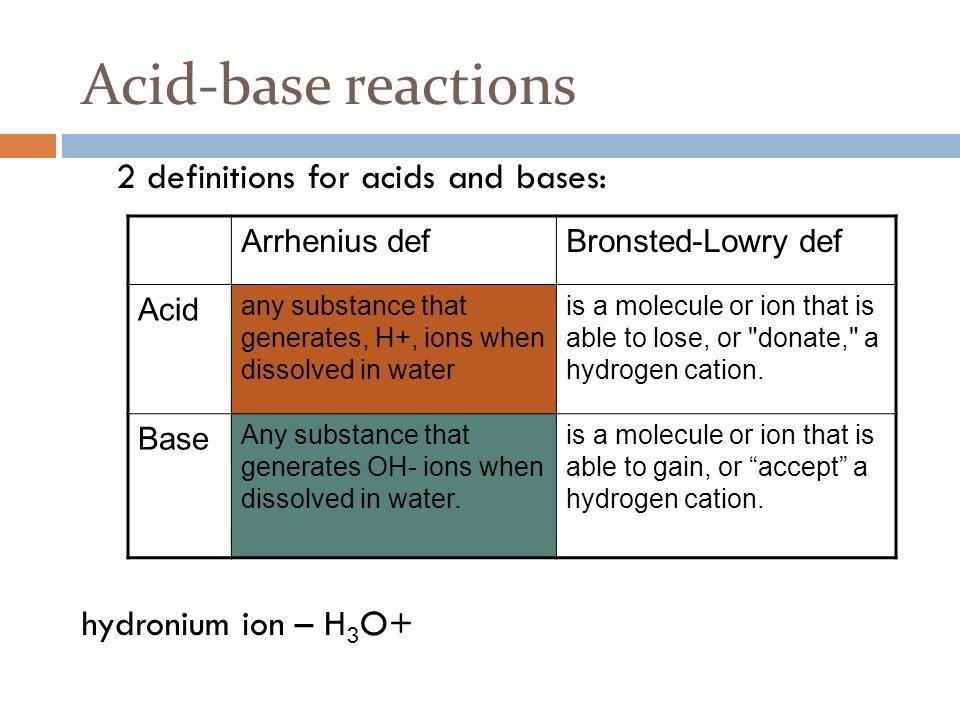
Acids increase the number of hydrogen ions (h+) in a solution (there are more hydrogen ions than hydroxide ions) and the resulting solution is said to be acidic. When an acid dissolves in water, hydrogen ions interact with water to form hydronium ions.
Human Impact On Air Quality September 24, Ph Scale Ph Scale – Measures How Acidic An Object Is. Ph Value Is Related To Its Hydronium Ion Concentration. - Ppt Download
When a chemical loses a hydrogen ion, is it behaving as an acid or a base?
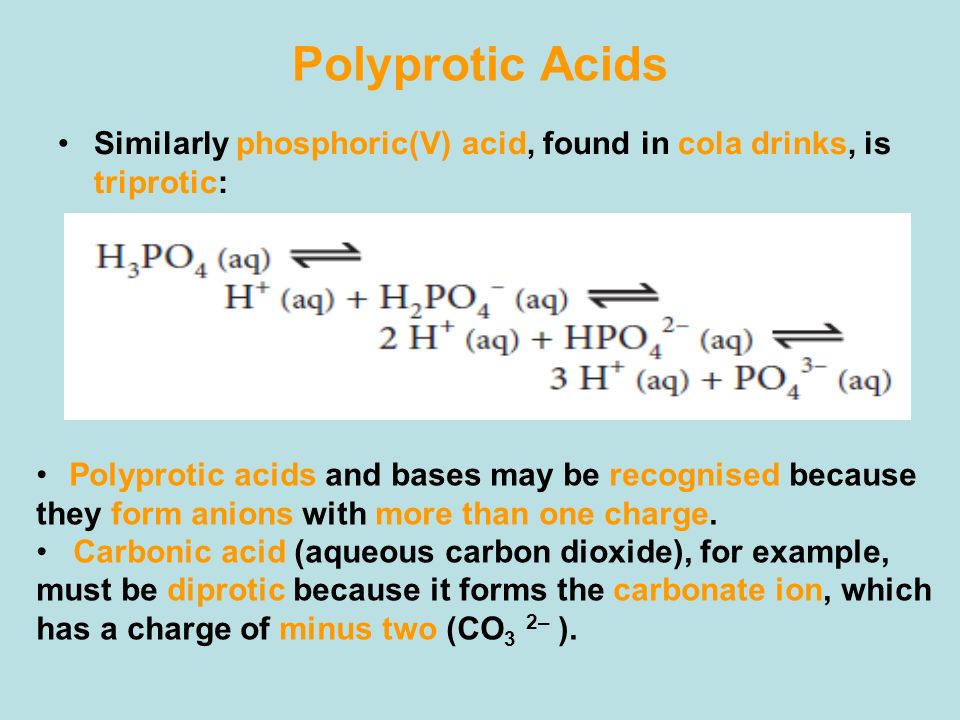
Do acids lose or gain hydrogen ions. The proton is considered to be donated rather than released; Need a bit more clarification? An acid is anything that loses a hydrogen ion (h+).
Acids contain at least one hydrogen atom that can be removed when the acid is dissolved in water. What ions do acids release in solutions? The strength of an acid or base depends on how many acid.
Ions are elements that lose or gain electrons. They can only lose them to other substances having strong negative regions that attract hydrogen ions. As the ph increases in acids, the acids lose their ability to ionise in water, so less hydrogen ions are produced.
Hydrogen ions are referred to as protons; Bases increase the number of hydroxide ions (there are more hydroxide ions than hydrogen ions) and the resulting solution is said to be basic or alkaline. Electrons how can ions be described?
What do ions gain or lose? Do hydrogen ions form when acids are dissolved in water? Bases increase the number of hydroxide ions (there are more hydroxide ions than hydrogen ions) and the resulting solution is said to be basic or alkaline.
Reactions between strong acids and strong bases decompose more completely into hydrogen ions (protons, positively charged ions) and anions (negatively charged ions) in water. An acid is a substance that produces hydrogen ions in a water solution. So stronger acids, like hydrochloric acid with a low ph, produce more hydrogen.
Acids, on the other hand, cannot lose hydrogen ions to empty space; Acids increase the number of hydrogen ions (h+) in a solution (there are more hydrogen ions than hydroxide ions) and the resulting solution is said to be acidic. For a weak acid and a weak base, neutralization is more appropriately considered to involve direct proton transfer from the acid to the base.
According to the arrhenius definition of acids and bases, acids dissociate and release hydrogen ions in solution (which, by the way is easily googleable), thus. When dissolved in water, acids donate hydrogen ions (h+). Do metals gain electrons from ions?
Hydrogen ions are hydrogen atoms that have lost an electron and now have just a proton, giving them a positive electrical charge.
The hydrogens bond with the two carbons to produce molecular orbitals just as they did with methane. Whereas methanol is infinitely miscible with water, which of course is strongly hydrogen bonding.

Hydrogen Bonding With A Hydrogen Bond: The Methane–Water Complex And The Penta-Coordinate Carbon - Sciencedirect
Sulfur is heavier than oxygen,.
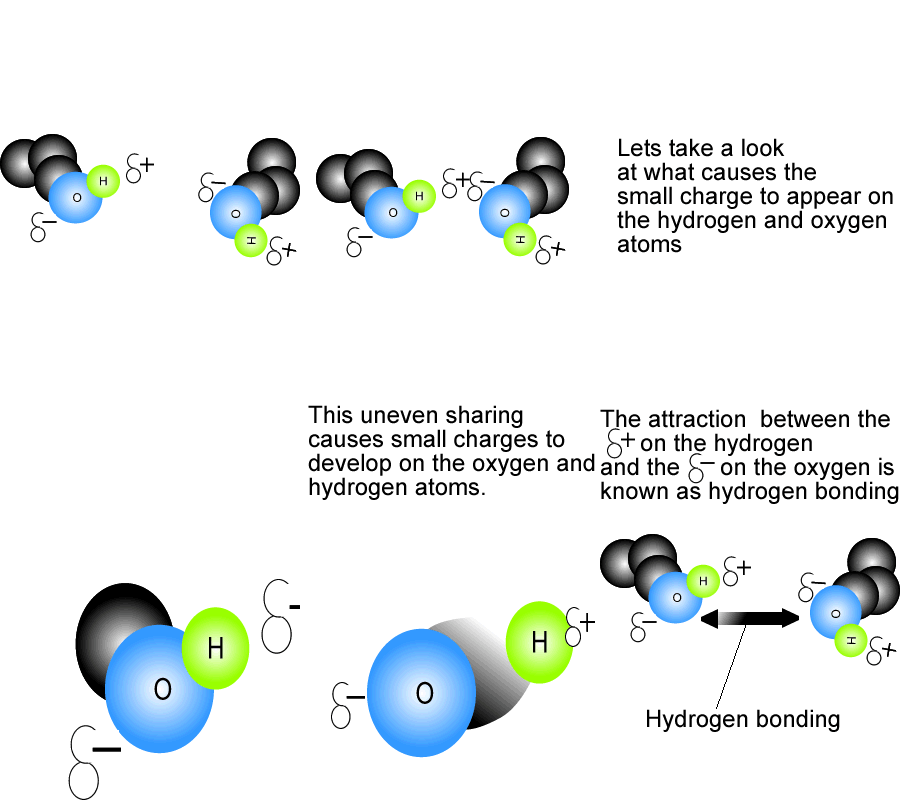
Hydrogen bonding force of methane. Video answer:we have been given the methane and we have been asked that there is hydrogen bonding or not between the molecules. Video answer:we have been given the methane and we have been asked that there is hydrogen bonding or not between the molecules. Such a bond is weaker than an ionic bond or covalent bond but stronger than van der waals forces.
The best known example of hydrogen bonding is water: Hydrogen bonds can exist between atoms in different molecules or in parts of the same molecule. On the other, other hand, phenol has limited water solubility;
Hydrogen bonding is observed when h is present in a compound with a highly electronegative element like f, o, and n. For example, water melts at 0.00 °c and boils at 99.98 °c; Hydrogen bonding in water vs hydrogen sulfide.
Kolade emmanuel omolagba studied sss 3 (graduated 2014) 1 y related There is no hydrogen bonding between meeting molecules and there is no hydrogen bonding of methane with water. 100% (12 ratings) transcribed image text:
Experts are tested by chegg as specialists in their subject area. The basic condition to form hydrogen bonds is that hydrogen should be attached to a highly electronegative element like nitrogen, oxygen or fluorine or any other highly electronegative element. No hydrogen bonding with water because it is a non polar molecule while in enclosed metal.
Since in chcl3 the hydrogen is not attached to fluorine, oxygen or nitrogen so people usually think that chloroform does not form hydrogen bonds. In this case, h is present along with c. Sulfur is in group 16 of the periodic table, the same as oxygen.
Hydrogen bonding is abscent in methane.hydrogen bonding is present between highly electronegative elements like fluorine,oxygen,nitrogen and hydrogen.examples for hydrogen bonding are water [between hydrogen and oxygen],hydrogen fluoride [between hydrogen and fluorine] etc. Hydrogen bonding, interaction involving a hydrogen atom located between a pair of other atoms having a high affinity for electrons; It is alsovital that you refer to the hydrogen bonding as being between molecules and not within them.
No hydrogen bonding with water because it is a non polar molecule while in enclosed metal. What is the intermolecular force of ch3cooh? We review their content and use your feedback to keep the quality high.
National center for biotechnology information. On the other hand, the boiling point of methanol has increased over 200 ∘c with respect to its parent hydrocarbon, whereas for phenol, the equivalent increase is 100 ∘c. There is no hydrogen bonding between meeting molecules and there is no hydrogen bonding of methane with water.